


Choosing the right tool bag supplier has become increasingly important as industrial equipment brands, hardware distributors, construction suppliers, and professional tool companies expand into global markets. Unlike lifestyle bags or promotional products, tool bags are expected to withstand heavy loads, abrasive environments, daily transportation, and demanding jobsite conditions while maintaining structural integrity over years of use.
For buyers sourcing products at scale, the challenge extends far beyond finding competitive pricing. A reliable manufacturing partner must possess technical sewing expertise, stable material sourcing capabilities, export experience, and the ability to deliver consistent quality across large production runs. As industrial users become more demanding and product expectations continue to rise, brands require suppliers capable of supporting long-term product development rather than simply fulfilling purchase orders.
This is why selecting a professional tool bag supplier has become a strategic supply chain decision rather than a transactional procurement exercise. The right partner can help improve product performance, reduce warranty risks, accelerate product development, and create sustainable competitive advantages in industrial markets.
Why Tool Bags Require Specialized Manufacturing Expertise
Many buyers underestimate the complexity involved in manufacturing professional tool bags. Unlike fashion bags or lightweight promotional products, tool bags are designed to carry concentrated loads consisting of metal tools, power equipment, testing devices, and heavy accessories.
The stress placed on carrying handles, shoulder straps, zipper assemblies, and bottom panels can be several times higher than what ordinary bags experience during normal usage. A poorly engineered product may perform well during sample evaluation but begin to fail rapidly once deployed in real working environments.
Why Tool Bags Require Specialized Manufacturing Expertise
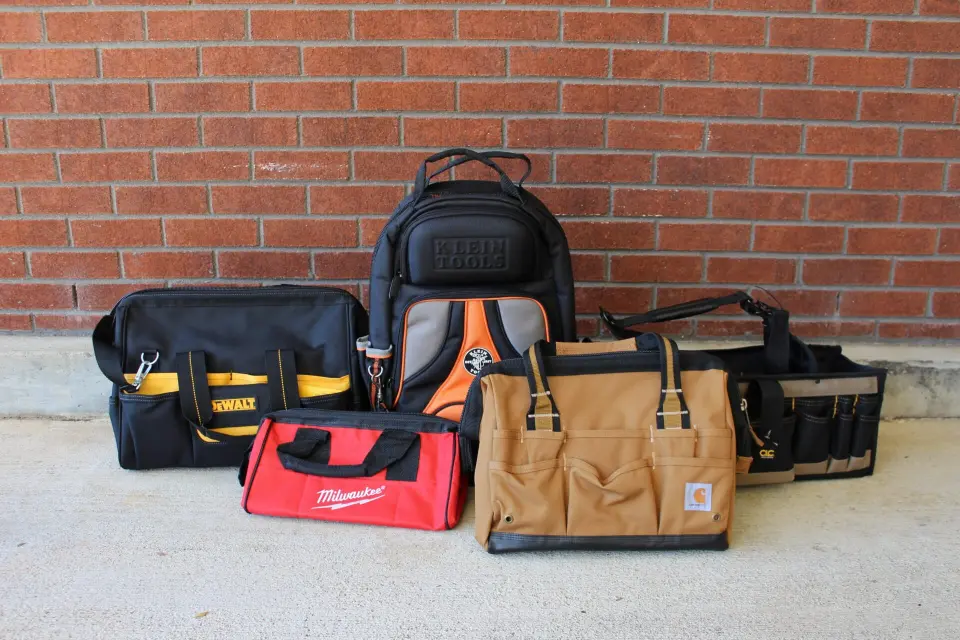
Professional tool bag manufacturers understand these challenges and design products accordingly. Reinforced stitching patterns, load-bearing webbing systems, multi-layer fabric construction, and structured support panels are integrated into the product architecture from the earliest design stages.
Factories lacking experience in industrial products often apply construction methods suitable for consumer bags but inadequate for demanding professional applications. As a result, failures frequently occur around strap attachment areas, zipper corners, and carrying handles where stress concentrations are highest.
For buyers planning long-term sourcing programs, manufacturing expertise becomes one of the most important selection criteria when evaluating a potential tool bag supplier.
The Importance of Heavy-Duty Material Selection
Material quality plays a major role in determining the long-term performance of industrial tool bags. Unlike consumer bags, tool bags are expected to carry heavy equipment, withstand abrasion, and perform reliably in construction sites, workshops, and outdoor environments. Professional users evaluate products based on durability rather than appearance alone, making fabric strength, zipper reliability, and structural integrity critical factors in customer satisfaction.
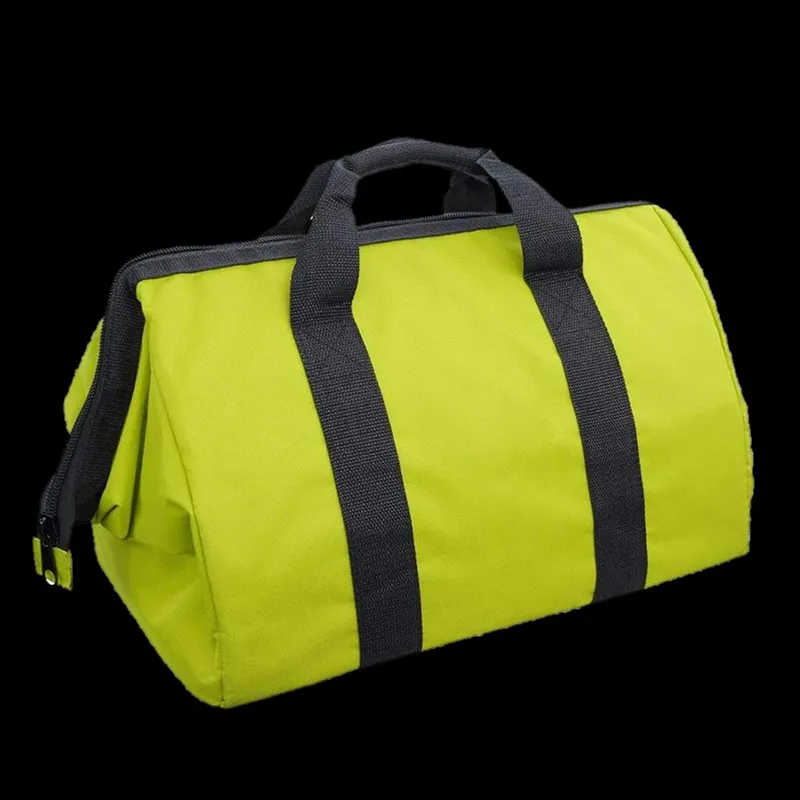
An experienced tool bag supplier understands that different applications require different material solutions. A lightweight service bag for field technicians prioritizes portability and organization, while industrial maintenance bags often require reinforced fabrics, rigid structures, and higher abrasion resistance. The ability to match materials to real working conditions is often what separates specialized manufacturers from general sewing factories.
Manufacturing Capabilities That Define Professional Tool Bag Factories
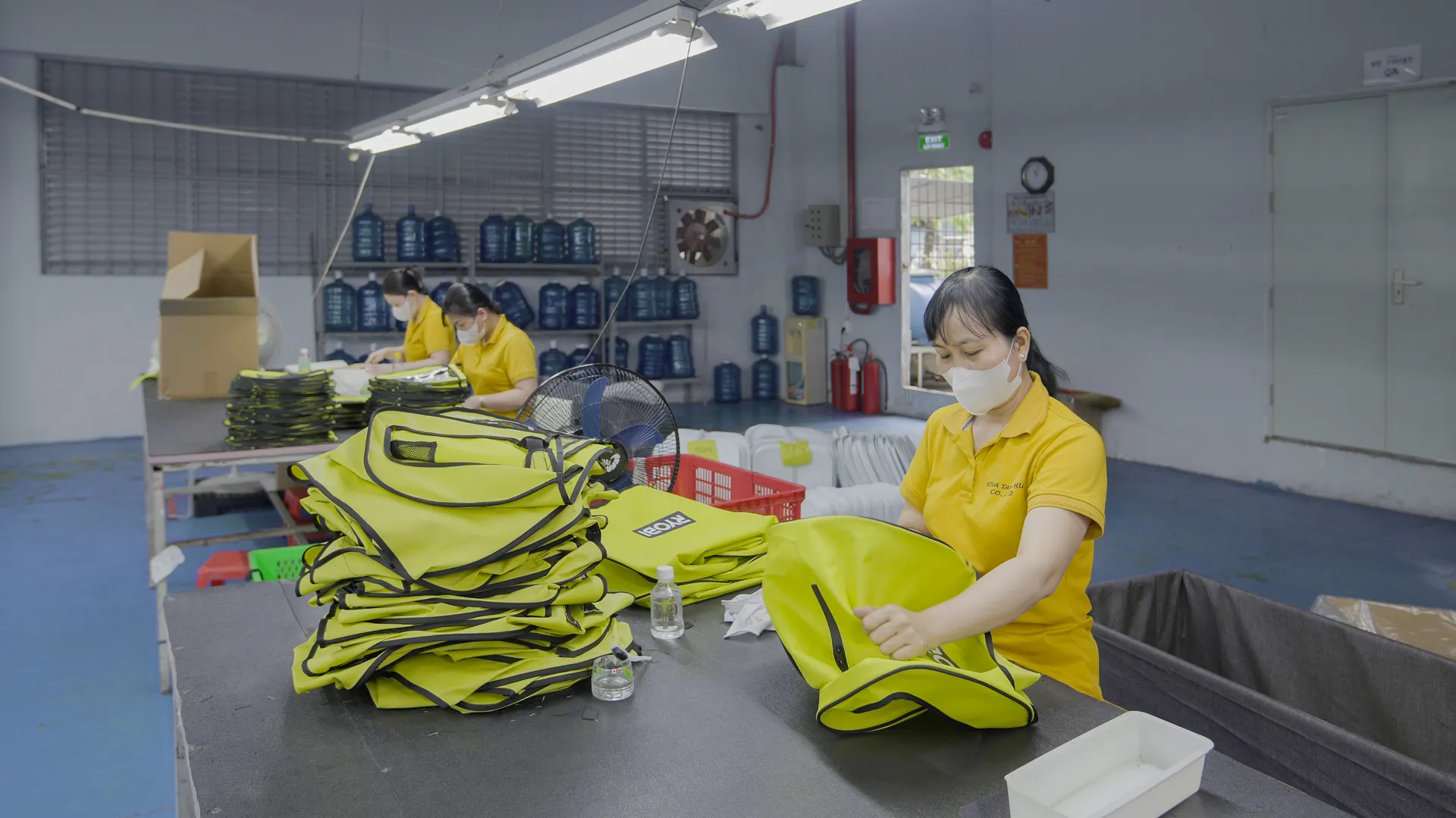
A modern tool bag factory requires far more than sewing machines and assembly lines. Heavy-duty products frequently require specialized machinery capable of processing thick materials, reinforced structures, and multiple fabric layers without compromising consistency or efficiency.
Industrial bartack machines, automatic webbing cutters, programmable pattern sewing equipment, and heavy-duty post-bed machines are commonly found in factories producing professional-grade products.
These investments directly influence product durability and production stability. Factories serving premium industrial brands often develop standardized construction methods for critical stress points. Reinforced handles, shoulder strap assemblies, and bottom panel connections are tested repeatedly to ensure they can withstand demanding usage conditions.
This engineering-focused approach becomes increasingly important when manufacturing wholesale tool bags intended for distribution across multiple markets where warranty costs and product failures can significantly affect brand reputation.
Product Development Support Beyond Standard Catalog Items
Many industrial brands no longer compete using generic catalog products. Instead, they differentiate themselves through functionality, organization, and user experience tailored to specific industries and workflows.
As a result, the role of a modern tool bag supplier has evolved beyond manufacturing into product development support. Experienced factories can recommend improvements in compartment layout, reinforcement locations, carrying systems, and material selection to improve both performance and manufacturing efficiency.
For private label brands, this engineering support often creates significant value by helping products stand out in highly competitive industrial markets while reducing unnecessary production costs.
Why OEM Flexibility Matters for Industrial Brands
Industrial customers operate across diverse industries ranging from telecommunications and utilities to aviation maintenance and construction services. As a result, one product rarely satisfies every customer segment. A professional tool kit bags manufacturer understands that successful products are often designed around specific workflows rather than generic storage requirements. Electricians require insulated tool organization, service technicians need rapid access to diagnostic equipment, and maintenance engineers prioritize durability and carrying efficiency.
Why OEM Flexibility Matters for Industrial Brands
OEM flexibility allows brands to tailor products around these unique operational requirements while building stronger differentiation in increasingly competitive markets. This customization capability has become one of the primary reasons buyers choose factory partnerships rather than relying solely on standard catalog offerings.
Quality Management Systems Reduce Long-Term Risk
For international buyers, quality consistency often matters more than achieving the absolute highest product specifications. A tool bag that performs exceptionally well during one production run but shows variations in stitching quality, material appearance, or component performance in subsequent orders can quickly become a major supply chain issue. This is particularly important for brands operating across multiple markets where product reliability directly affects customer trust and warranty costs.
For this reason, experienced manufacturers rarely rely on final inspection alone. Instead, quality management is integrated throughout the entire production process, beginning with raw material verification and continuing through sewing, assembly, packaging, and shipment preparation. Fabric consistency, hardware specifications, and color matching are typically verified before production starts, while in-line inspections help identify problems before they spread across larger production batches.
A mature quality system does more than reduce defects. It improves production predictability, supports stable lead times, and gives buyers greater confidence when scaling orders or expanding distribution channels. Over the long term, these systems often become one of the most valuable assets a professional tool bag supplier can offer.
Multi-Category Manufacturing Creates Strategic Advantages
Many industrial brands initially enter the market with a single product category before gradually expanding into complementary solutions as their customer base grows. Tool bags are often followed by service backpacks, equipment organizers, laptop cases, and technical carrying systems designed for field technicians and maintenance professionals.
Managing multiple suppliers for these related products can create unnecessary complexity in communication, quality management, and production planning. Working with an experienced backpack manufacturer that already supports multiple industrial categories allows buyers to consolidate sourcing activities while maintaining consistent construction standards and brand identity across different product lines.
This approach not only improves operational efficiency but also simplifies future product development. As markets evolve and customer requirements change, a versatile backpack supplier with broader manufacturing capabilities is often better positioned to support new product opportunities without requiring buyers to rebuild their supply chains from the ground up.
The Growing Demand for Technical Tool Storage Solutions
Industrial users today expect more from their carrying equipment than simple storage capacity. As technicians increasingly work with electronic diagnostic devices, laptops, testing equipment, and specialized instruments, the role of the tool bag has evolved from a basic carrying solution into a mobile workstation designed around productivity and workflow efficiency.
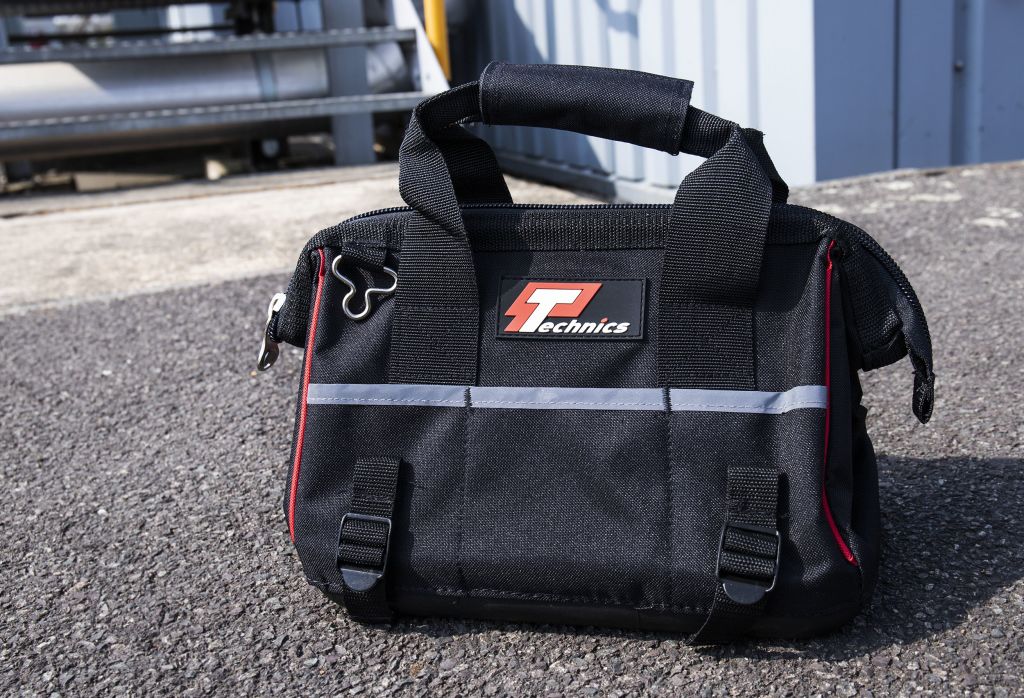
This shift has accelerated demand for products such as the modern technics tool bag, which combines heavy-duty construction with dedicated compartments, protective panels, modular organization systems, and ergonomic carrying features. These products are designed not only to protect expensive equipment but also to reduce downtime by improving accessibility and organization in demanding field environments.
Manufacturers capable of supporting these increasingly specialized requirements are likely to become preferred partners for industrial brands seeking long-term growth opportunities. As technical professions continue to evolve, the demand for advanced storage solutions is expected to increase alongside broader trends in mobility, field service operations, and digital maintenance systems.
Building Long-Term Supply Chain Partnerships
The most successful sourcing relationships are rarely based solely on pricing or individual purchase orders. Instead, they evolve into long-term partnerships where manufacturers contribute not only production capacity but also technical expertise, product development support, and supply chain stability.
A reliable tool bag supplier often becomes an extension of the buyer’s product team, helping identify opportunities for cost optimization, material improvements, and design refinements that improve competitiveness over time. These contributions become increasingly valuable as brands scale production volumes, enter new markets, or expand into additional product categories.
For buyers focused on sustainable growth, selecting the right manufacturing partner can influence far more than short-term purchasing costs. The strength of that partnership often affects speed-to-market, product consistency, and the ability to respond quickly to changing customer expectations, making supplier selection a strategic decision that continues to create value long after the first order is delivered.
Partner with Bola Bag for OEM and Export Manufacturing
At Bola Bag, we help industrial brands, distributors, and private label companies develop professional-grade carrying solutions through OEM/ODM manufacturing and export-ready production systems. As an experienced tool bag supplier, we specialize in heavy-duty industrial products including technician bags, maintenance bags, service backpacks, equipment organizers, and custom tool storage solutions developed for demanding working environments.
Our factory combines advanced sewing capabilities, industrial material expertise, strict quality control systems, and flexible customization support to help clients build products that perform in real-world applications. Whether you are searching for a reliable tool bag factory, an experienced tool kit bags manufacturer, or a long-term manufacturing partner capable of supporting international growth, Bola Bag is ready to support your next project. Contact us today to discuss your requirements, request samples, and explore custom manufacturing solutions for your industrial product line.
Read more: How to Evaluate a Sport Bag Supplier Before Large-Scale Production


BOLA BAG's BLOG YOU MAY ALSO BE INTERESTED IN
Low Investment Bag Business: How to Start Garment Business With Low Investment the Smart Way
How to Make Custom Bags for Business: From a Logo File to a Box of Finished Bags
What Is Garments Technology? The Skills and Systems That Turn a Sketch Into a Product