


A cutting room might stack eighty layers of fabric on one table and cut them all with a single pass of the knife. If one layer has a wrinkle, one piece comes out wrong. If the whole stack leans a few millimetres to one side, eighty pieces come out wrong. That is why the quiet, slow step before cutting matters so much. So what is spreading in garment industry terms? It is the job of unrolling fabric and laying it in flat, aligned layers on a cutting table so the pattern pieces can be cut accurately and with as little waste as possible. This guide covers what spreading involves, what makes a good spread, the main ways layers are laid, how it is done by hand or machine and why bag fabrics make it harder.
What Is Spreading in Garment Industry Production
Spreading sits between planning and cutting. First the pattern pieces are arranged on a long sheet called a marker, which shows exactly where every piece will be cut. The marker sets the length of each layer and how much fabric the order will use, which is why what is marker making in garment industry is so closely tied to spreading.
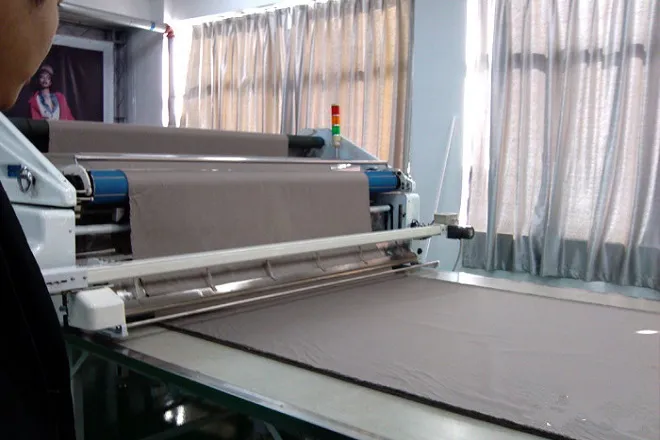
Spreading In Garment Industry
Once the marker is ready, the spreader lays fabric along the table to that length, layer after layer, until the stack reaches the number of plies needed for the order. The marker goes on top and the stack is cut. It is one of the early steps in what is garment production, and mistakes here travel through every step that follows.
What a Good Stack of Fabric Layers Needs
A well laid spread looks simple, but it has to meet several conditions at once. Missing any one of them shows up later as wrong sized pieces, wasted fabric or defects in the finished garment.
Every Layer Lined Up Along One Edge
Fabric rolls are rarely exactly the same width, so spreaders line every layer up along one edge, usually the edge nearest the operator. That keeps pattern pieces on the same grain in every layer and makes sure pieces near the edge are not cut short.
No Stretching and No Slack in the Fabric
Fabric pulled too tight on the table springs back after cutting, and the pieces shrink. Fabric laid too loosely forms ripples. Knits and stretch fabrics are often left unrolled to relax for a period before spreading, so they settle to their natural length first.
Fabric Faults Found and Worked Around
Holes, stains and weaving faults found during spreading are marked and either cut out or moved to a place where no pattern piece will land. Where a roll ends partway, the new roll is started with an overlap at a marked point so no piece is left incomplete.
The Right Number of Layers for the Cutting Knife
Each cutting method has a practical height limit. A stack that is too high for the knife bends as it is cut, so the bottom layers come out a different shape from the top ones. The height depends on the fabric thickness and the cutting machine.
The Three Ways Layers Are Laid
All Layers Face Up in the Same Direction
Every layer is laid face up and running the same way, and the fabric is cut at the end of each layer. This is the safest mode for fabrics with a nap, like velvet or corduroy, and for one way prints, because every piece faces the same direction. It is also the slowest, since the spreader returns to the start for each layer.
Layers Folded Back and Forth Face to Face
The fabric is laid down the table, folded at the end and laid back again, so each layer faces the one below. This is fast and produces mirrored pairs automatically, but it only works for fabrics with no nap and no one way print.
Layers Face to Face but Running One Way
The fabric is cut at the end, turned over and laid again from the same starting point, so layers face each other but all run the same direction. It gives mirrored pairs on fabrics with a nap, at the cost of more handling.
Spreading by Hand or by Machine
Small orders and sample rooms often spread by hand, with two people walking the roll along the table. It is flexible but slow, and the result depends on the skill of the team. Larger factories use spreading carriages or automatic spreading machines that run along rails on the table edge, controlling tension, counting layers and aligning the edge as they go. Machines are faster and more consistent, and they improve how much of each roll ends up in usable pieces, which feeds directly into what is efficiency in garment industry across the cutting room.
Why Spreading Is Harder With Bag Fabrics
Most spreading guides are written for shirt and trouser fabrics. Bag fabrics behave differently. Coated polyester and nylon are slippery, so layers slide on each other. Heavy canvas and thick laminated foam are stiff and bulky, so far fewer layers fit under a knife. Many bag parts are also cut from webbing, mesh and foam as well as shell fabric, each spread and cut separately. That is why bag factories often cut smaller stacks, use clamps or weights to stop layers slipping, and check each part closely before sewing begins.
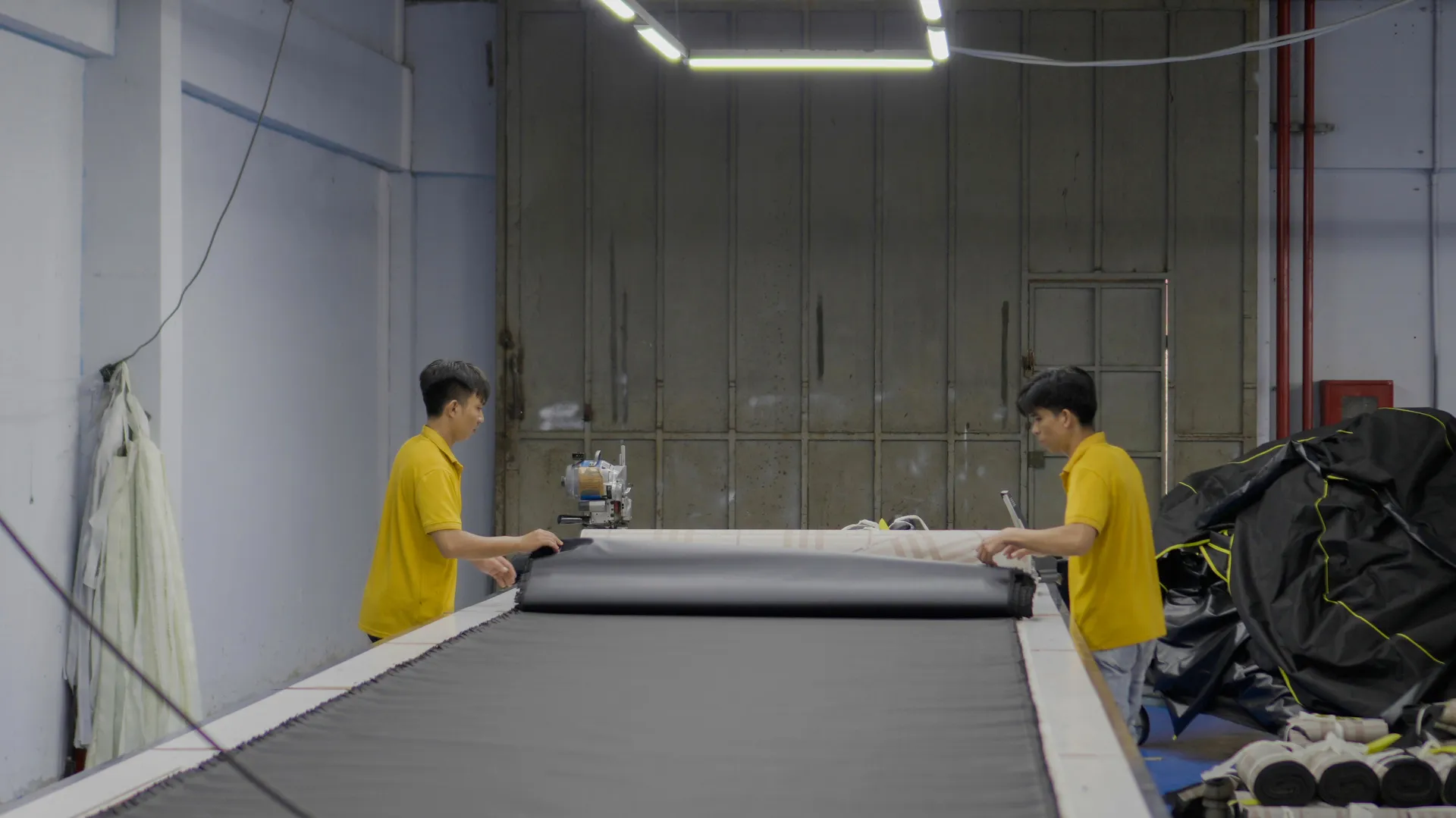
Spreading Bag Fabrics
Some bag parts skip the stacked spread altogether. Small pieces such as tabs, patches and zipper ends are often punched out with steel dies, and webbing is usually cut from a roll to length rather than spread. Samples and very small orders may be cut one layer at a time. The goal is the same as in any cutting room: every piece the right size, from the right part of the fabric, with as little waste as possible.
Conclusion
What is spreading in garment industry production? It is the step that lays fabric in flat, aligned, correctly tensioned layers ready for cutting. A good spread keeps one edge straight, avoids stretching, works around fabric faults and stays within the height the cutting knife can handle. The spreading mode depends on nap, prints and whether mirrored pairs are needed. Done by hand or machine, it decides both cutting accuracy and fabric waste, and bag fabrics make every part of it more demanding.
Bola Bag has manufactured backpacks, tool bags and technical bags in Ho Chi Minh City since 2015, working with coated fabrics, canvas, webbing and foam for brands worldwide as an OEM and ODM partner. See how we work on our capabilities page, or send us your tech pack and a target quantity and we will quote it honestly.
Read more: What Is Marker in Garments? How It Impacts Fabric Waste and Cost


BOLA BAG's BLOG YOU MAY ALSO BE INTERESTED IN
What Is Efficiency in Garment Industry Terms? The Formula, a Worked Example and What Moves the Number
Finding a Canvas Bag Supplier for Long-Term Business Growth
How to Cooperate with a Custom Tool Kit Bags Manufacturer