


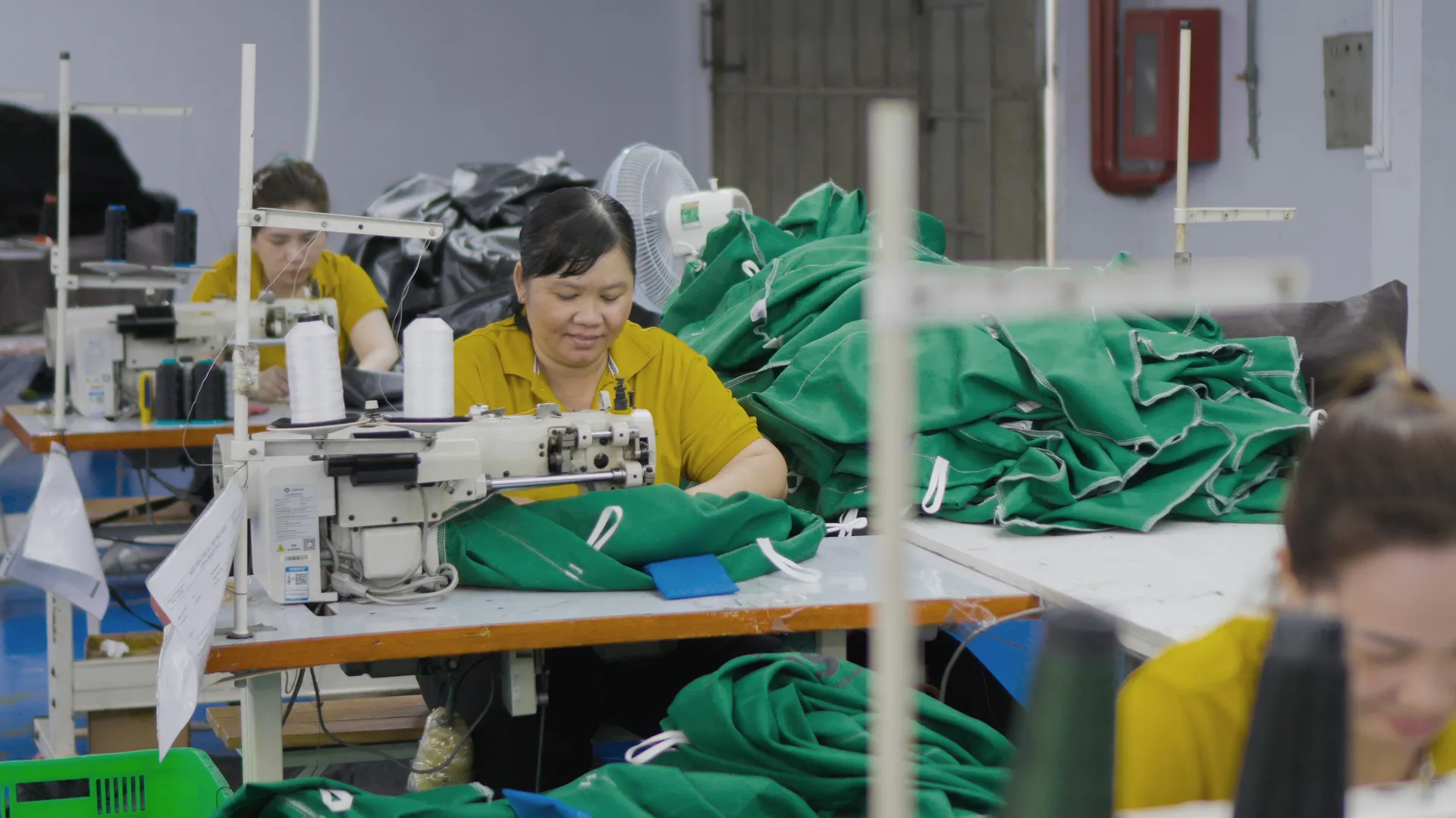
Walk onto any sewing floor at four in the afternoon and there will be a whiteboard with a percentage on it, and everyone from the line supervisor to the owner will know whether today’s number is good. That percentage is efficiency, and it is the single figure the whole industry runs on. So what is efficiency in garment industry language? It is the share of paid working minutes that actually turned into finished garments, measured against a standard time for each piece. This article gives the definition at operator, line and factory level, the formula with a worked example, what counts as a good number, the four things that move it, and why the sum comes out differently on a bag line.
What Is Efficiency in Garment Industry
Efficiency compares the work a line produced with the work it was paid for. The unit of work is the standard minute, the time an average trained operator should take to sew a garment, and everything else is arithmetic on top of it. The measure exists at three levels.
Operator Efficiency Measures Workers Against the Standard Time
Take the pieces an operator finished in a shift, multiply by the standard minutes for that operation, and divide by the minutes the operator was on the line. An operator who produces 400 standard minutes of work in a 480 minute shift is running at 83 percent. Factories use it for training, bonuses and deciding who sits at the bottleneck machine.
Line Efficiency Measures the Whole Sewing Line
The same sum for every operator on the line added together, and the number on the whiteboard. It captures not only how fast people sew but how well the line is balanced, how often it waits for cut parts or thread, and how much time is lost to changeovers and repairs. Line efficiency is the figure factory capacity is planned around.
The Efficiency Formula and an Example
The formula every industrial engineer uses is the same one in the Online Clothing Study efficiency formula: line efficiency equals total standard minutes produced, divided by total minutes attended, multiplied by 100. Standard minutes produced is the output in pieces times the garment’s standard allowed minutes, usually written SAM. Minutes attended is the number of operators times the shift length in minutes.
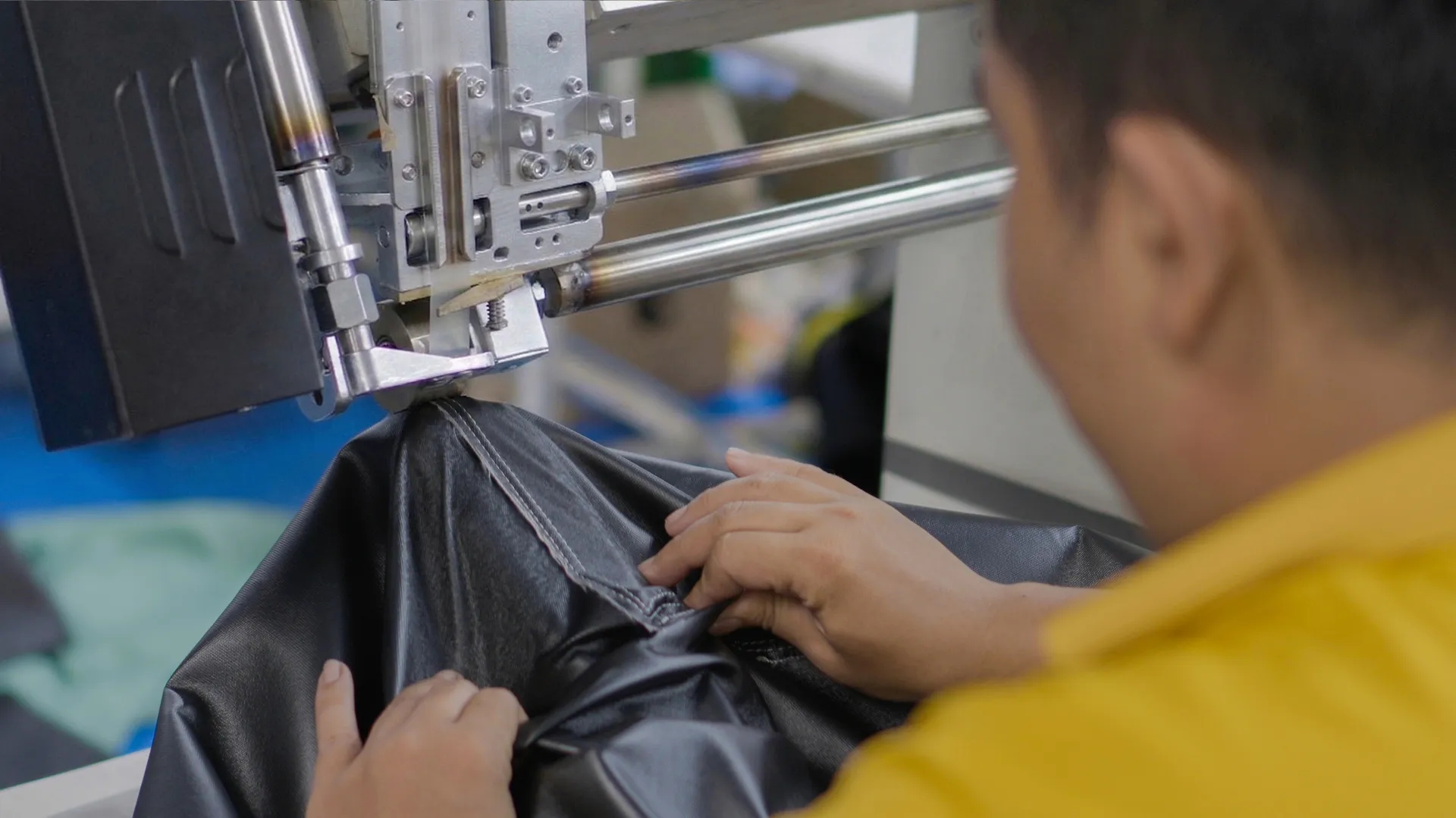
Bola Bag Factory
A worked example makes it concrete. A line of 30 operators works an 8 hour shift, which is 480 minutes each and 14,400 minutes attended in total. The garment has a SAM of 20 minutes and the line finishes 400 pieces. Standard minutes produced is 400 times 20, or 8,000. Efficiency is 8,000 divided by 14,400, which is 55.6 percent. If the SAM had been set wrongly at 25 minutes the same 400 pieces would show as 69 percent, which is why the standard minute is argued over more than the output.
What Counts as Good Efficiency
Most sewing lines in the world run between 50 and 65 percent, and a line that has been balanced and trained well runs at 75 to 85. The gap is not effort. It is waiting, walking, rework and the wrong person at the bottleneck, and closing it is the main lever a factory has on cost, because the same wages buy half as many garments again. Efficiency is the line that owners control most directly in the sum of how much profit in garment shop owners actually keep.
The Four Things That Move the Number
Efficiency does not improve by asking people to sew faster. It improves by removing the reasons they stop, and there are four.
What Is SAM and Why the Standard Minutes Per Piece Decide Everything
The standard allowed minute is the time for the operation plus allowances for fatigue and handling, set by time study or a predetermined system. Set it too generous and efficiency looks wonderful and costs are wrong. Set it too tight and the line never reaches target. The factories that measure SAM with a stopwatch rather than guessing from the last style are the ones whose efficiency numbers mean anything.
Put the Right Worker at the Slowest Station
A line runs at the speed of its slowest operation. If bar tacking takes 90 seconds and every other operation takes 60, the whole line waits on the bar tack machine and efficiency falls to the bar tacker’s pace. Balancing means splitting that operation, adding a machine or moving the fastest operator to it. Finding where the time goes is the first half of how to improve garment business performance without spending money, and the answer is almost always one station.
What Is Waste in Garment Industry Terms
Waste is usually counted as fabric on the cutting room floor, but the waste that kills efficiency is time: fetching bundles, waiting for cut parts or thread, repairing a machine and, above all, rework. Every rejected piece was sewn twice and counted once, which is why quality and efficiency are tracked together.
Efficiency on a Bag Sewing Line Works Out Differently
The formula is identical for bags and the numbers behave differently. A backpack has a SAM of 40 to 90 minutes against 15 to 25 for a shirt, because it has more components, more materials and more machine types, so a bag line produces fewer pieces and each stop costs more standard minutes. The bottleneck sits at the heavy machines, the bar tacks and the binding, and rework costs more because unpicking a bar tack through nylon and foam takes longer than sewing it. Costing a bag by the minute rather than by the piece, which is the method behind how to calculate costing in garment industry terms, is what lets a bag factory quote accurately, because a 60 percent line and an 80 percent line produce the same bag at very different prices.
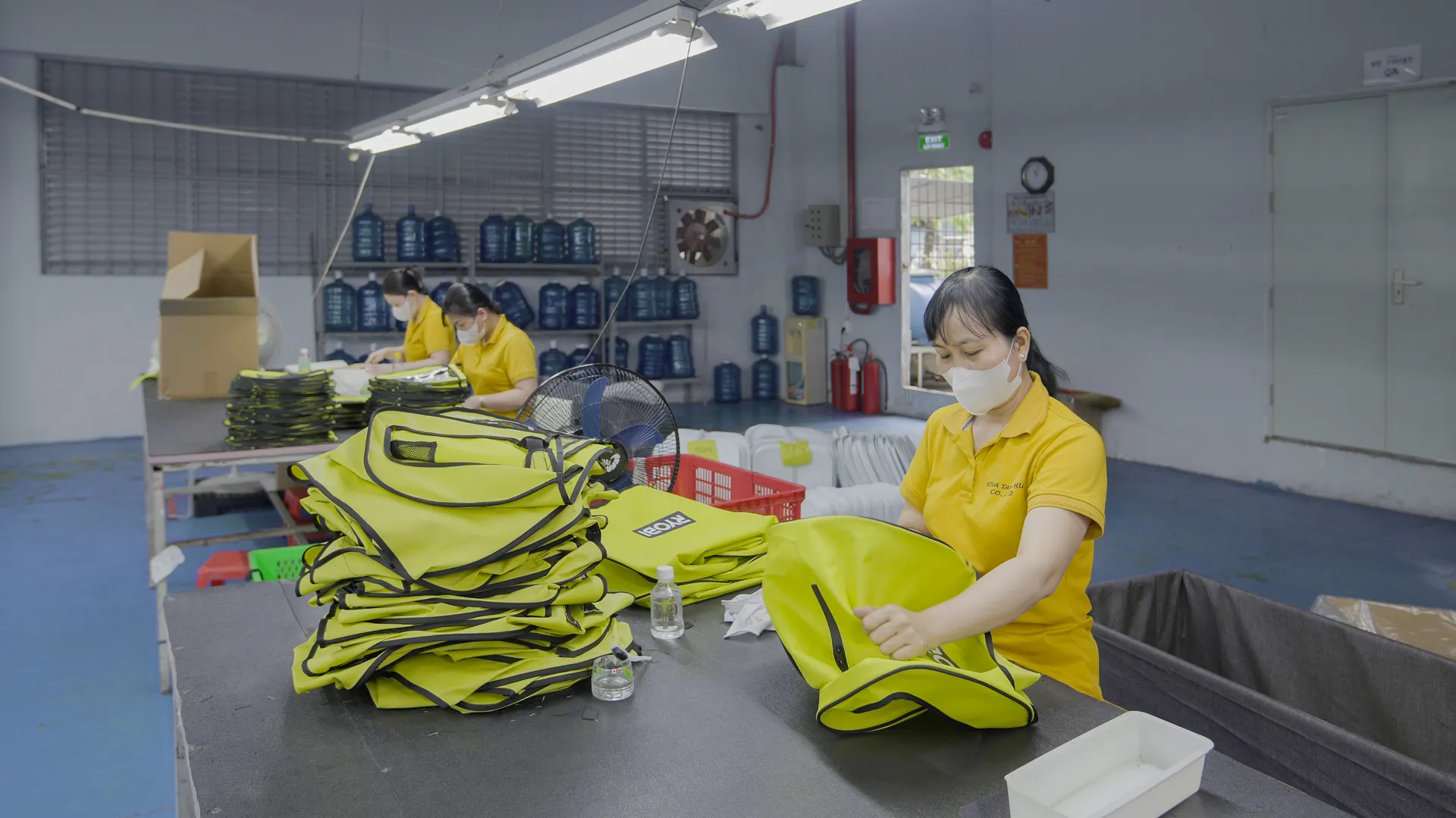
Bola Bag Factory
For a brand, the practical consequence is that a factory’s efficiency is your price. A factory that knows its line efficiency by style and balances lines every morning quotes lower and delivers on time, and one that does not quotes from hope. Asking a factory what its line efficiency was last month is one of the most revealing questions a buyer can put to a garment OEM or a bag maker, and the ones that answer with a number are the ones to work with.
Conclusion
What is efficiency in garment industry terms? The share of paid minutes that became finished garments, measured against a standard minute per piece, at operator, line and factory level. The formula is standard minutes produced divided by minutes attended, so 400 pieces at a 20 minute SAM from 30 operators on an 8 hour shift is 55.6 percent. Most lines run between 50 and 65 and good ones between 75 and 85, and the gap closes with an honest SAM, a balanced line, less rework and longer runs. On a bag line the SAM is three times higher, which is why efficiency is the number behind every price a bag factory quotes.
On that floor, Bola Bag has run balanced bag lines in Ho Chi Minh City since 2015, manufacturing backpacks, technical bags and totes for brands worldwide as an OEM and ODM partner, with sampling in seven to ten days and production in thirty to forty five. See how we work on our capabilities page, or send us your design and a target quantity and we will quote it from a real standard minute rather than a guess.
Read more: Is Textile Industry Profitable? Key Factors That Drive Success


BOLA BAG's BLOG YOU MAY ALSO BE INTERESTED IN
Find the Best Backpack Supplier for Your Business Needs
Vietnam Canvas Tote Bag Manufacturers Serving Global Brands
Explore top 5 Best Cotton Canvas Bag Manufacturers with Export Standards in 2026