




Two shops did 400,000 dollars last year. One owner took home 52,000. The other took home nothing and put 9,000 back in on a credit line. Same revenue, same category, both selling bags. The difference was not talent or luck. It was that the second owner had been running the business against a margin number that described the product rather than the company, and by the time the gap showed up in the bank account it had been growing quietly for eleven months. So when someone asks how much profit in garment shop terms is normal, the first job is working out which number they mean.
The Number You Are Quoting Is Probably the Wrong One
There are two profit figures in any shop and they answer completely different questions. Confusing them is the most common reason an owner believes the business is healthier than it is, so it is worth being pedantic about which one is on the table.
Gross Margin Describes a Product
Gross margin is revenue minus what the goods cost you, as a percentage. A tote landed at 4 dollars and sold at 16 gives 75 percent. It is a genuinely useful number, and it is the one to use when deciding whether a product deserves a place in the range. What it cannot tell you is whether the business is making money, because it stops before rent, wages, advertising, and every other cost of actually operating. The formal definition of gross margin makes that boundary explicit, and the boundary is the whole point.
Net Margin Describes a Company
Net margin is what is left after everything. For small soft goods businesses it usually lands between 5 and 15 percent. That gap between 75 and 12 is not a rounding error or a sign of mismanagement. It is simply the cost of being a business rather than a spreadsheet. When someone tells you their shop runs at 60 percent, they are quoting gross, they are probably quoting a good month, and you cannot benchmark yourself against it.
One Tote, All the Way Down
Abstractions are easy to nod along to, so here is a real unit, sold direct to consumer at 16 dollars.
- Factory price at 1000 units: 2.60
- Freight, duty, and inland delivery: 1.40. Landed cost 4.00, gross margin 75 percent.
- Paid acquisition at a 28 percent blended rate: 4.48
- Payment processing at 3 percent: 0.48
- Outbound shipping and packaging, partly recovered from the customer: 1.90
- Returns and damages at 6 percent of revenue: 0.96
- Fixed overhead spread across volume: 2.10
That leaves 2.08 per unit, or a net margin of 13 percent. It is a decent business. It is also a very long way from 75 percent, and the whole thing swings on two lines. Push acquisition to 38 percent and net margin drops to roughly 3 percent. Cut it to 20 percent and you are close to 21 percent. Almost every soft goods business that quietly stops working does so because that one line moved and the pricing never followed.
What Realistic Looks Like, By Model
Before optimising anything, it helps to know which band you should be in. The business model sets that range far more than pricing skill does, and the three below behave differently enough that a number signalling trouble in one is unremarkable in another.
Direct to Consumer
Highest gross, highest cost, most control. Price at three to five times landed cost, expect 65 to 80 percent gross, and expect acquisition to take 20 to 35 percent of revenue straight back off the table. Net of 8 to 15 percent is a good year. Anything above 20 percent usually means strong repeat purchase or an audience you did not have to pay for, and both are worth more than any pricing trick.
Wholesale and Private Label
Gross margin roughly halves, to 30 to 45 percent, because your buyer needs room to mark up. In exchange you get purchase orders instead of forecasts, almost no marketing spend, and volume that unlocks better factory pricing on everything else you make. Net of 10 to 18 percent is normal. Plenty of businesses that look less glamorous than a direct to consumer brand are considerably more profitable, and the reasons are laid out in is textile industry profitable.
Corporate and Promotional
The quiet one. A company ordering 800 branded totes for a conference does not return anything, does not need to be retargeted, and often does not haggle, because the bag is a line item in an event budget rather than a purchase they agonise over. Gross margin sits between wholesale and retail, and the cost to acquire the order is one email. Categories built for this, such as wholesale canvas tote bags and bulk tote bags with logo, exist because the economics are unusually kind.
Four Leaks Nobody Budgets For
Unsold stock is the big one, and it hides well. Every unit in the warehouse was paid for in cash and will eventually be sold at a discount or written off, but until that happens it sits on the balance sheet looking like an asset. A sell through rate of 70 percent instead of 90 sounds tolerable. On a 30,000 dollar order it is 6,000 dollars of margin that quietly became clearance.
Currency is the second. If you buy in dollars and sell in euros or pounds, a five percent move can erase most of the profit on a wholesale deal you priced four months earlier. The third is sampling: three rounds on four styles, at a few hundred dollars a round, is real money that never appears in the cost per unit. The fourth is the finance cost of holding inventory for ninety days, whether that shows up as interest or simply as the other thing you could not do with the cash.
None of these are dramatic. That is exactly why they survive so long without being noticed.
Why Bags Sit Differently on the Balance Sheet
Everything above applies to soft goods generally. Bags then add three structural quirks of their own, two helpful and one less so, and together they explain why a bag business and an apparel business with identical gross margins can finish the year in very different places.
One Size Removes the Inventory Trap
This is the underrated structural advantage and it is worth more than most people realise. An apparel line needs each style in five sizes, so a 1000 unit order is really five bets, and you will be left holding whichever sizes you guessed wrong on. Most bags are one size. A 1000 unit order is 1000 sellable units. The difference shows up as a higher sell through rate, which flows directly into net margin without you doing anything clever.
Higher Ticket, Slower Replacement
A backpack carries three to six times the gross profit of a tee shirt on a similar margin percentage, which is excellent. The catch is that people replace bags every few years rather than every season, so repeat purchase is weaker and each sale carries more of its own acquisition cost. Brands that solve this widen the range across occasions rather than waiting for a customer to wear out the first bag.
Bags Age Slowly Against Trend
Unsold apparel from last spring is a markdown. Unsold bags are usually just stock. That extra shelf life is a genuine cash flow advantage for a small business, and it means a forecasting mistake costs you patience rather than gross margin.
If You Actually Want the Number to Move
Four levers matter, roughly in order of effect. Order volume comes first, because reaching a real price break improves margin on every unit without changing what the customer pays, and the curve is steeper than most founders expect. Range discipline comes second: fewer styles means more volume per style, fewer samples, and less orphaned inventory. Sell through comes third, since the discounting you avoid is pure margin. Buying direct from the factory rather than through an intermediary comes fourth, and typically removes a layer taking 10 to 20 percent.
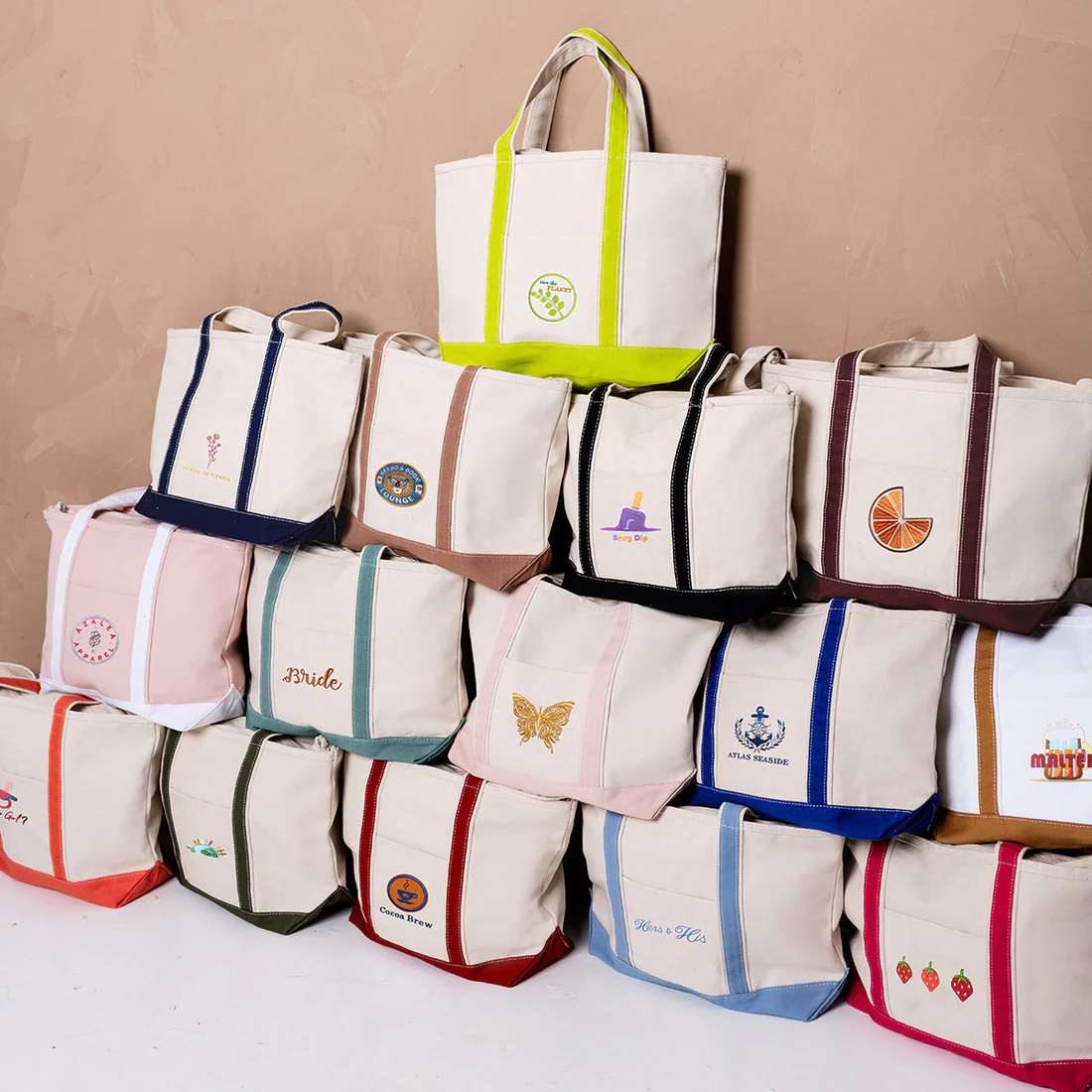
Bulk tote bags with logo
Product mix belongs in that list too. A structured bag with more panels and hardware carries a higher unit price and more absolute margin than a flat tote, provided the factory has the machinery for it. Before rebuilding your pricing, it is worth checking your cost assumptions against how much does it cost to manufacture a bag.
Conclusion
Expect 30 to 45 percent gross on wholesale, 65 to 80 percent on retail, and 5 to 15 percent net in either case once the real costs are counted. The owners who beat those numbers are rarely the ones charging more. They are the ones running fewer styles at higher volume, buying direct, and watching sell through rather than revenue. Bags help, because one size removes the inventory fragmentation that quietly eats apparel margins. But the biggest single improvement available to most shops is simply knowing which of the two numbers they have been steering by.
If you want to see what your unit economics look like with the right production partner, Bola Bag manufactures bags and technical soft goods for brands and distributors worldwide. Browse the range on our products page, or send us your design and target volume and we will come back with an itemised quotation you can build a real margin model on. A specialist tote bag manufacturer or an established cotton bag supplier will always beat a spreadsheet estimate.


BOLA BAG's BLOG YOU MAY ALSO BE INTERESTED IN
How Fashion Brands Partner with Custom Cotton Tote Bag Manufacturer Globally
Securing Production Continuity with the Bola Bag Fire Safety Drill
What Is Spreading in Garment Industry? How Fabric Is Laid Before the First Cut