


A buyer once sent us a spreadsheet for a backpack with three lines on it: fabric, sewing, and profit. The number at the bottom was 6.20. The real number was closer to 14, and the difference was not markup. It was forty two components that had never been written down. Costing is rarely wrong because the arithmetic fails. It is wrong because the list is short. Learning how to calculate costing in garment industry practice is mostly a discipline of completeness, and this walks through the sheet the way a factory actually builds it.
Five Blocks, Built From the Bottom
Factories almost all build the sheet the same way, which is useful, because it means you can ask for it in a format you already understand. The structure matters as much as the arithmetic inside it.
What the Sheet Contains
Every working cost sheet has the same five blocks. Materials covers the main fabric, lining, and every trim. Labour covers cutting, sewing, and finishing time. Overhead covers factory costs that cannot be traced to one unit, such as rent, power, supervision, and machine depreciation. Margin is the factory’s profit. Logistics covers packing, inland transport, and export handling. Miss one block and the total will be confidently, quietly wrong.
Build Up, Never Down
Start from material consumption and work upward to a factory cost, then compare it to what the market will pay. The temptation is the opposite: start from the price you want and reverse engineer costs until they fit. That produces a number that looks acceptable and cannot be manufactured. If the gap does not close, change the product, not the spreadsheet.
Materials: Where the List Gets Long
Materials are usually the largest block and the one buyers audit least carefully, mostly because the interesting part is not the fabric. It is everything attached to it.
Consumption Includes the Waste
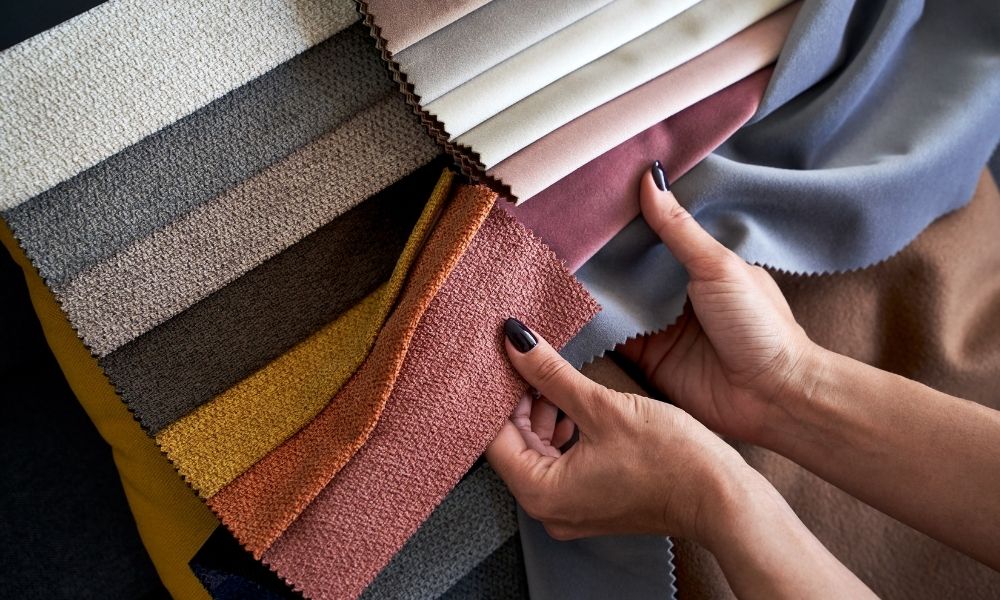
Material cost begins with how much fabric one unit actually uses, including the waste created by laying pattern pieces on a roll. That waste is real and typically runs 8 to 15 percent depending on how well the pieces nest.
Fabric Material
A poorly nested marker can add ten percent to your largest cost line and nobody will mention it. Ask for consumption per unit with wastage stated separately so you can see whether the figure is efficient or padded.
Trims Are Where Costing Dies
Fabric is easy to remember. Trims are not, and in bags they can reach 40 percent of material cost. A single mid range backpack might carry two zippers, six sliders, webbing in two widths, three plastic buckles, foam panels, a moulded back, piping, binding tape, thread in two colours, a woven label, a hangtag, and a polybag. That is fourteen lines before anything unusual. Each has a unit price and a minimum order quantity of its own.
Minimums on Components Are a Real Constraint
This is the one that catches small brands. A custom moulded buckle might have a minimum of 5000 pieces. If your first run is 500 bags using two buckles each, you are buying five times what you need and either amortising it across run one or carrying the rest as inventory. Neither is wrong, but both belong in the cost sheet rather than in a surprise invoice.
Labour and Overhead: Minutes, Not Guesswork
Labour is the block founders find hardest to challenge, because it arrives looking like a black box. It is not one. It is arithmetic built on time, and once you can read it you can argue with it.
Standard Minutes Explain Everything
Labour is built from standard allowed minutes, the time a trained operator needs per operation, summed across the construction, then multiplied by the factory’s cost per minute. A simple tote runs 8 to 12 minutes. A structured technical backpack runs 45 to 90. That is why two products made from similar fabric can differ enormously in price, and why construction complexity matters far more than material choice on labour heavy items.
Overhead Falls as Quantity Rises
Overhead is usually applied as a percentage of labour or a rate per minute. The point that matters to a buyer is that overhead per unit drops as the order grows, because setting up a line, making patterns, and cutting a marker are fixed costs spread across the run. That is the entire mechanism behind price breaks. It is also why a sample costs many times more per unit than production, and why pricing a range off sample costs produces a business plan that dies on contact with reality.
Factory Cost Is Not Your Cost
Landed cost adds international freight, insurance, duty, port and clearance charges, and inland delivery to your warehouse. Duty varies widely by classification and destination and for soft goods it is rarely trivial. A quote that wins at the factory gate can lose comfortably once freight and duty are added, particularly when two suppliers are quoting on different trade terms.
Shoulder Bag Wholesale
Normalise before you compare. An ex works price and a delivered price are not the same kind of number, and the difference regularly exceeds twenty percent. Accounting treats all of these inbound costs as part of the cost of goods sold rather than as expenses, which is also how they should sit in your margin model. For the practical version of what all this adds up to, see how much does it cost to manufacture a bag.
Why the Bag Sheet Runs Longer Than the Apparel Sheet
Everything above applies to any sewn product. Bags then stretch the sheet in two directions at once, and both are easy to underestimate if your instincts were formed in apparel.
More Components, More Operations
An apparel cost sheet might carry fifteen lines. A backpack sheet routinely carries fifty. Every pocket adds panels, every panel adds seams, every seam adds minutes, and structure such as foam, moulded backs, and frame sheets adds both material and specialised operations. Reinforcement points need bar tacking, which is its own machine and its own operation. None of this makes bags a worse business. It does mean an estimate built on apparel intuition will be badly low, and the category specific numbers are in how much does it cost to manufacture a backpack.
Testing and Tooling Are Cost Lines, Not Afterthoughts
Zipper cycle testing, seam strength testing, load testing, restricted substance testing, and third party inspection all cost money and all belong in cost per unit at your actual volume. So do tooling charges for custom hardware and moulds, which are one time costs needing amortisation across the first run. Leaving them off the sheet does not make them disappear. It relocates them to the end of the quarter, where they look like a mystery.
The Sheet Is a Negotiating Tool, Not a Receipt
A supplier willing to show the breakdown rather than a single total is telling you something useful about the relationship. Once material, labour, overhead, and margin are separate lines, the conversation stops being haggling and starts being problem solving. Maybe the fabric can be bought better at your volume. Maybe one construction detail is adding twelve minutes of labour for a feature no customer has ever noticed. You cannot have either conversation with one number.
And the cheapest reductions almost always come from design rather than negotiation. Remove a pocket. Simplify a seam. Standardise hardware across three styles so each component’s volume triples. Consolidate two fabric weights into one. Factories running high volume programmes, whether that is laptop bag manufacturers work or wholesale gym bags orders, will usually suggest these unprompted if you ask, because a simpler product is one they can run well. Whether the resulting margin justifies the effort is the question taken up in is textile industry profitable.
Conclusion
Costing correctly is not clever. It is complete. Build upward from consumption, price every trim individually instead of estimating, turn construction into standard minutes, absorb overhead at your real order quantity, and carry the figure through to landed cost before comparing it to anything. For bags, expect a longer component list, more operations, and testing and tooling costs apparel never carries. The sheet built this way will not always give you the number you were hoping for. It will give you one you can price a business on, which is considerably more useful.
If you want a real breakdown rather than an estimate, Bola Bag quotes with itemised material, labour, and tooling lines so you can see where every figure comes from. Have a look at our capabilities and material selection pages, then send us your tech pack or even a sketch with a target volume and we will build the sheet with you rather than hand you a total.


BOLA BAG's BLOG YOU MAY ALSO BE INTERESTED IN
Wholesale Sports Bags Manufacturing Solutions for Sportswear Brands
Why a Garment OEM Factory Isn’t the Right Fit for Bag Production
Finding the Best Travel Bag Manufacturer for Your Next Adventure