


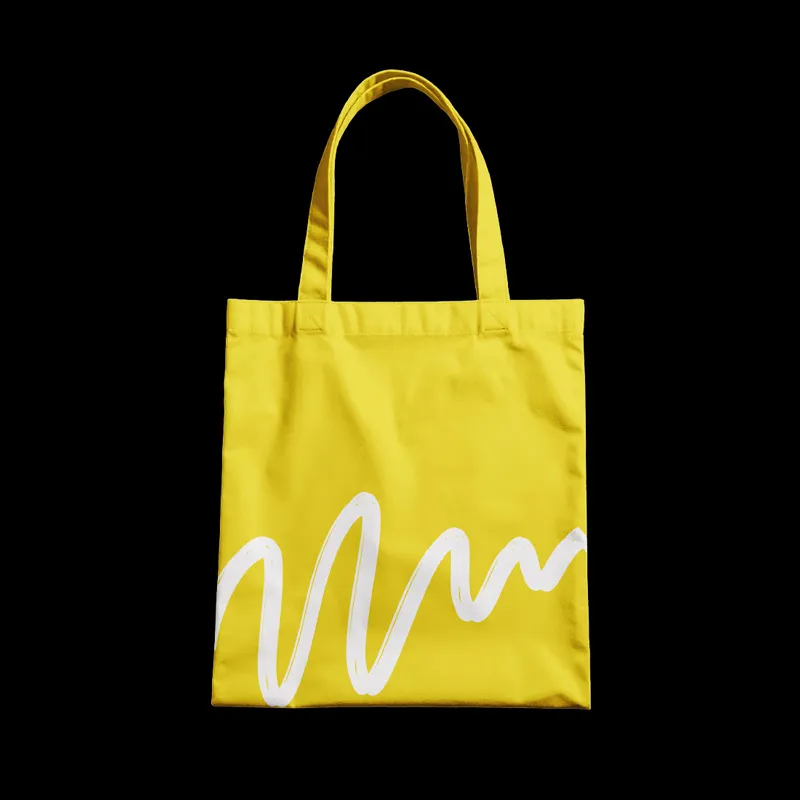
Two brands can sell the same tote for the same price to the same customer and have completely different businesses underneath. One owns a sewing floor, buys fabric by the roll, and lives on production planning. The other owns a laptop, a tech pack, and a relationship with a factory, and lives on forecasting and cash flow. Both are running a garment business, and the daily work has almost nothing in common. So the honest answer to how to run garment business operations starts with picking which of those businesses you are running, because the operating model decides what every single week looks like.
How to Run Garment Business Starts With Choosing a Manufacturing Model
Three arrangements cover nearly every brand that does not own a factory, and each one hands you a different set of daily responsibilities.
OEM: You Supply the Tech Pack and a Garment OEM Factory Makes It
You supply the design and the tech pack, the factory supplies everything else. Your daily work is specification, sampling, and quality inspection. You own the design and the customer, the factory owns the process. This is the model most brands settle on because it balances control against workload. The term is borrowed from electronics and the general idea of an original equipment manufacturer applies here almost unchanged.
ODM: You Put Your Label on the Factory Own Designs
You choose from the factory’s existing designs and add your label. Fastest to market, lowest sampling cost, and least distinctive, because the same bag is available to your competitors with their label on it. Sensible for testing a category before designing your own.
CMT: You Buy Every Metre of Fabric and Pay Only for the Sewing
You buy every metre of fabric and every zipper yourself and pay the factory only for cutting, making, and trimming. Maximum control over materials, maximum daily workload, and you carry the inventory risk on raw materials as well as finished goods. It suits brands with a material story that the factory cannot source, and almost nobody else.
The Weekly Rhythm That Keeps an Outsourced Brand Solvent
Once the model is chosen, the week has a shape, and it repeats. Monday is sell through: what moved last week, by style and channel, and what that implies for the next order. Midweek is the supplier: production status, sample feedback, and the running forecast you share with the factory so they hold fabric for you. Late week is cash: what has been paid, what is due, and whether the next deposit is covered before wholesale customers settle. That cash cycle, deposit to production to shipping to a customer paying on sixty day terms, is four to six months long and it widens as you grow, which is the single most counterintuitive fact in the business and the one that anyone learning how to do garment business after launch runs into first.
Running the Sales Channels Without Losing Margin
Where the product sells decides the margin, the marketing cost, and how predictable the month is. Most brands run two of these three.
Direct to Consumer: High Margin and High Cost Per Sale Where Bags Outperform Apparel
Highest margin, highest cost per sale, most control. Paid acquisition commonly eats 20 to 35 percent of revenue and gets more expensive as you scale. It rewards a tight range, good photography, and honest specifications, and it punishes anything with a fit or returns problem, which is one reason bags outperform apparel online. Pricing for that channel has to absorb all of it, which is most of what how to do online garment business profitably comes down to.
Wholesale: Half the Margin With None of the Marketing Cost and Real Purchase Orders
Roughly half the gross margin, almost none of the marketing cost, and purchase orders instead of forecasts. The daily work becomes account management, order confirmation, and chasing payment terms. Volume from wholesale also drops your unit cost on every channel, which is why it is worth running even at a thinner margin.
Corporate and Bulk Orders Where Wholesale Backpack Manufacturers Become a Channel
Companies buying branded bags by the hundred for events and onboarding. No returns, no acquisition cost beyond an email, and a lumpy order pattern that does not follow the retail season.
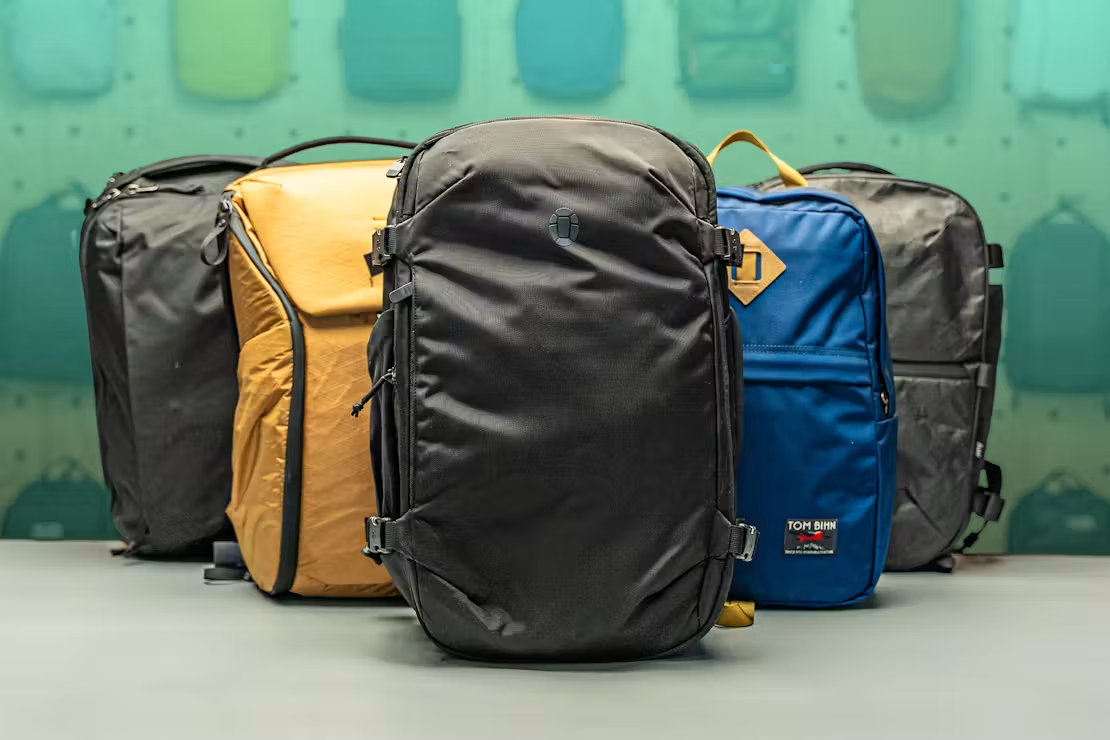
Bulk mini backpacks – Bola Bag
For brands with a backpack in the range, this is often where the connection to wholesale backpack manufacturers becomes a channel in its own right rather than a supply question.
The Four Numbers You Run a Garment Business On
A garment business run on revenue alone is being run blind. Four numbers, reviewed weekly, tell you what is actually happening.
Landed Cost Per Unit Rebuilt Every Time You Order
Factory price plus freight, duty, and delivery. It moves with volume and with currency, and every pricing decision rests on it. Rebuild it every time an order is placed rather than carrying last year’s figure. The full sheet, line by line, is what how to calculate costing in garment industry practice means in the first place.
Sell Through Rate Is the Number That Decides the Next Order
Units sold divided by units bought, by style. Below about 70 percent a style is heading for discount and should not be reordered. Above 90 percent you ordered too little. This is the number that decides the next order more than any other.
Gross Margin by Channel Rather Than a Blended Figure
Not overall. By channel, because direct to consumer and wholesale have different price points and different costs, and a blended margin hides which one is carrying the business.
Cash Runway in Weeks Falls Precisely When Sales Rise
How many weeks the bank balance covers if nothing new comes in. Growth consumes cash before it produces any, and this number falls precisely when sales are rising.
Quality and Compliance Are Daily Rather Than Annual
The reputation of a garment business is rebuilt with every shipment, and the paperwork behind it is now a gate rather than a formality. Inspect at three points: material before cutting, inline at around twenty percent of the run, and a final random inspection against an acceptable quality level written into the purchase order. Keep the compliance file current, because retail and corporate buyers increasingly ask for restricted substance testing and factory audit reports before placing an order at all. The same goes for any environmental claim on the product page, which has to be evidenced or removed. Whether is the textile industry sustainable at all is a question worth answering honestly before writing the copy, because the claim has to survive a buyer asking for evidence.
Growing the Operation Without Breaking It
Growth breaks businesses that scale complexity instead of volume, and the temptation to add styles arrives the moment something sells.
Add Volume to Proven Styles Before Designing New Ones With Custom Backpack Manufacturers
A second colourway of a proven product costs almost nothing and doubles the assortment. A new construction means new patterns, new samples, and new inventory risk. Sell more of what already sells, then widen along the lines your factory already runs well, whether that is moving from totes toward the work of custom backpack manufacturers or extending a shape that is working.
Treat Laptop Bag Manufacturers and Every Other Factory as an Asset Rather Than a Quote to Beat
A factory that has made your product twenty times knows where it fails and how to pass your inspection first time. Switching for a three percent saving costs a sampling cycle and a quality risk that never appear on the quotation.
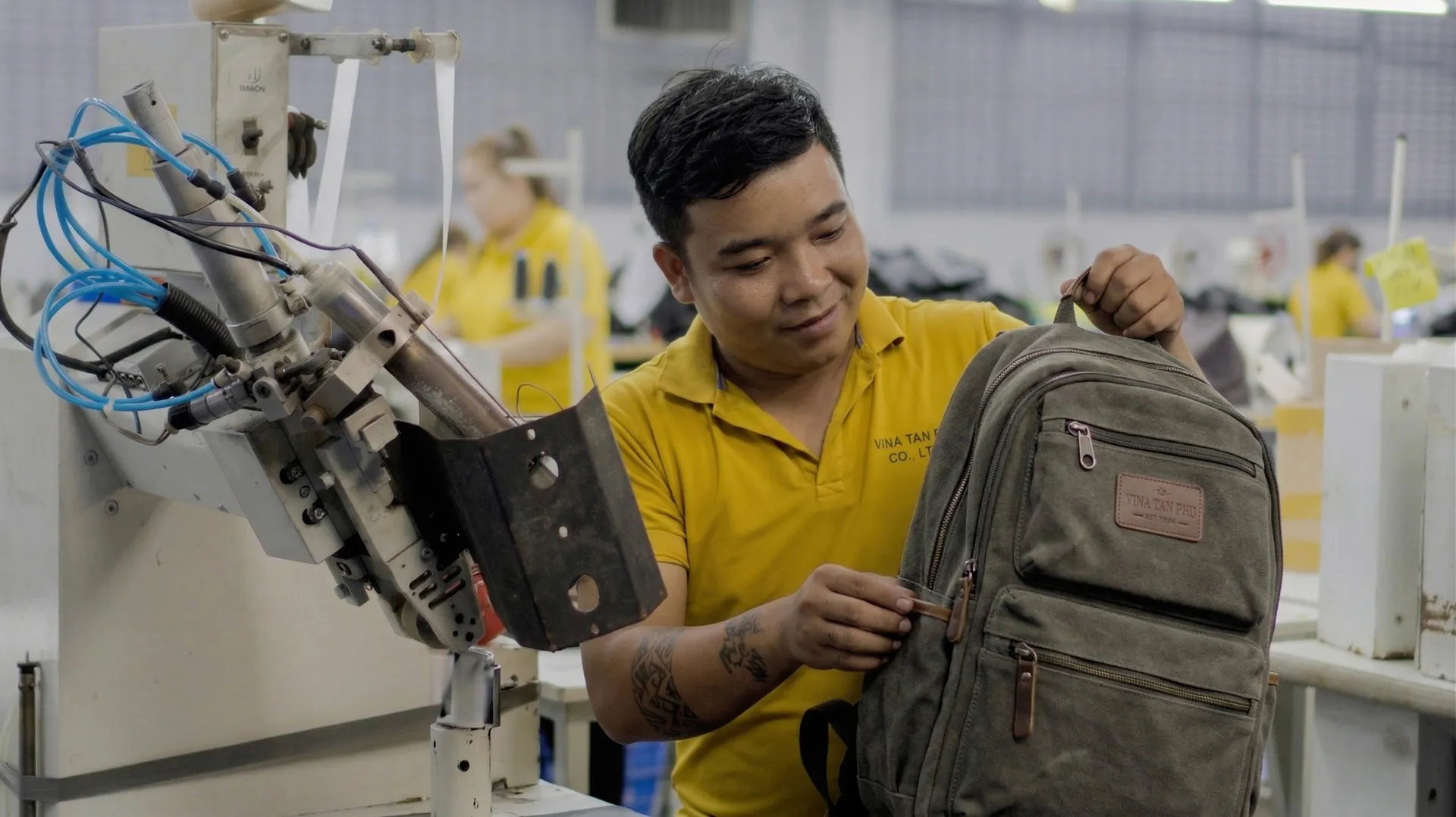
Bag Sample – Bola Bag
Share your forecast even when it is uncertain, because a supplier holding fabric for you is worth more than a slightly cheaper one who has never made your bag. Brands moving into technical product at volume learn this fastest, which is why relationships with laptop bag manufacturers tend to last years once they work.
Conclusion
How to run garment business operations well is a matter of choosing a model and then running the same week over and over with discipline. Pick OEM, ODM, or CMT and stay there long enough to get good at it. Run sell through on Monday, the supplier midweek, and cash on Friday. Sell through two channels, know the margin of each, and treat corporate orders as a real channel. Watch landed cost, sell through, channel margin, and runway. Inspect three times, keep the compliance file current, and add volume before styles. None of it is exciting. All of it is what separates a brand that lasts from one that had a good launch.
If the model you are running needs a production partner that can grow with it, Bola Bag manufactures bags and technical soft goods to export standards for brands and distributors worldwide. Read how we work with partners on our partnership page, or tell us which model you run and what you are making and we will show you how our lines fit it.
Read more: How to Do Garment Business Well: The Part Nobody Writes About


BOLA BAG's BLOG YOU MAY ALSO BE INTERESTED IN
How to Make Custom Bags for Business: From a Logo File to a Box of Finished Bags
Is Textile Industry Profitable? Key Factors That Drive Success
Shoulder Bag Wholesale: A Complete Guide to Sourcing From the Right Manufacturer