


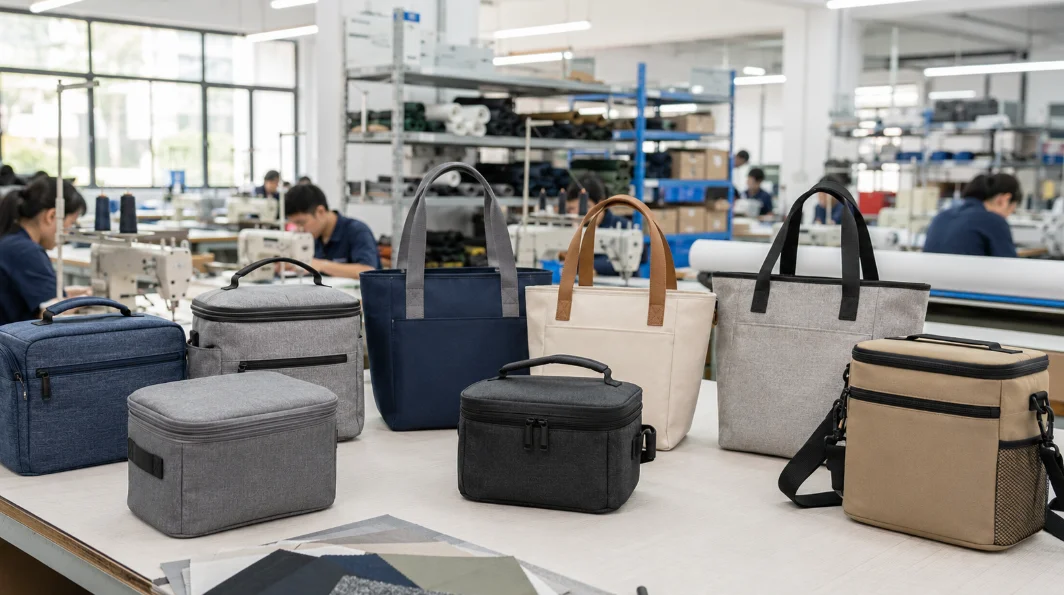
Insulated lunch bags have quietly become one of the steadiest categories in the soft goods industry. They sell year-round rather than seasonally, they carry healthy margins for retailers because the manufacturing cost is relatively low compared to backpacks or luggage, and they give brands an easy entry point into food-adjacent lifestyle products without the regulatory complexity of anything that actually touches food directly. That steady demand is exactly why so many retailers, corporate gifting companies, and school supply distributors end up searching for lunch bag manufacturers rather than trying to source a single product from a general bag factory that treats the category as an afterthought.
Choosing the right lunch bag manufacturers, however, involves more technical evaluation than most buyers expect going in. Unlike a backpack or tote, a lunch bag has to manage thermal insulation, food-safe interior linings, and moisture control all at once, and a factory that gets any one of those wrong can end up shipping a product that fails within a few weeks of daily use. This guide breaks down what actually goes into producing a quality insulated lunch bag, what certifications matter, and how buyers can evaluate lunch bag manufacturers the same way they would evaluate any other long-term production partner.
Why the Lunch Bag Category Is More Technical Than It Looks
On the surface, a lunch bag looks like one of the simplest products a factory can produce: an outer shell, an insulated lining, a zipper, maybe a strap. In practice, the insulation layer is where most of the engineering decisions happen, and the choice of material has a direct effect on how the finished bag performs and how it is priced.
Most lunch bag manufacturers build their insulation around one of three core materials. PEVA, or polyethylene vinyl acetate, is the standard food-safe lining used across the industry because it is BPA-free, phthalate-free, and naturally waterproof, which makes it the default interior surface for anything that will hold food or drink directly. Expanded polyethylene foam, usually referred to as EPE, sits in the middle tier and provides solid insulation and cushioning at a lower cost, though it is not inherently food-safe on its own and typically needs to be paired with a PEVA layer or a food-grade foil face for direct food contact. Cross-linked polyethylene, or XPE, along with certain EVA foam constructions, delivers the strongest thermal retention available in a flexible bag and is generally reserved for premium cooler-style lunch bags where extended insulation time matters more than unit cost.
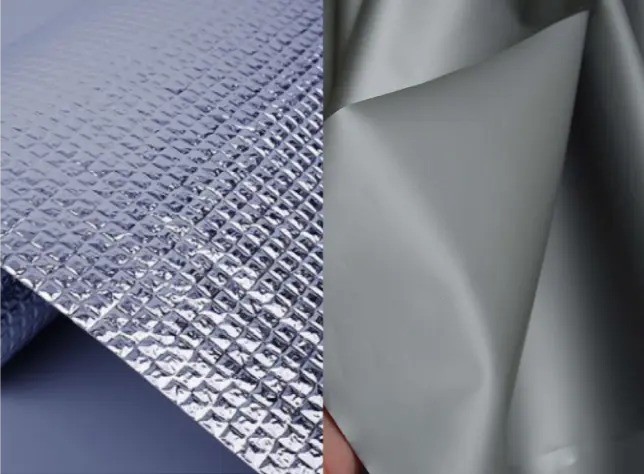
Polyethylene vinyl acetate is the standard food-safe lining used across the industry
Getting this layering wrong is one of the most common quality failures in the category. A factory that quotes an aggressively low price on a lunch bag but skips the food-safe interior lining, or substitutes a thinner foam than specified, can produce a bag that looks identical to a sample but fails basic food-contact safety standards. This is precisely why buyers evaluating lunch bag manufacturers should ask for the exact lining specification in writing rather than relying on a general description like “insulated interior.”
Certifications That Separate Serious Lunch Bag Manufacturers From the Rest
Because lunch bags come into direct contact with food and beverages, the compliance bar sits noticeably higher than it does for a standard backpack or duffel. Reputable lunch bag manufacturers typically hold a combination of certifications depending on the export market. For the United States, FDA food-contact compliance and BPA-free verification are close to non-negotiable, especially for any brand planning to sell through major retail chains. For European markets, buyers should look for compliance with EU food-contact material regulation and REACH chemical safety standards, alongside LFGB certification, which originated in Germany but is widely recognized across the EU as a rigorous food-safety benchmark. Social and quality audits such as BSCI and ISO 9001 add another layer of assurance, confirming that the factory itself operates under acceptable labor and quality-management standards rather than only certifying the finished product.
Buyers sourcing for California specifically should also confirm Prop 65 compliance, since that regulation covers a broader list of restricted substances than federal FDA rules alone. None of these certifications guarantee that every unit off the line will be flawless, but a factory that cannot produce documentation for at least the certifications relevant to its target export market is a signal to keep looking rather than proceeding to a bulk order.
Minimum Order Quantities, Lead Times, and Pricing Realities
Across the lunch bag manufacturing industry, minimum order quantities tend to sit somewhere around 300 to 500 units per design, with lead times typically running 30 to 45 days from confirmed sample to finished production, depending on the complexity of the insulation structure and whether custom printing or embroidery is involved. Pricing varies significantly based on lining material, size, and customization level, but buyers should treat any quote that sits far below the market range with caution, since the insulation layer is the one component that is easy to cut corners on without it being visible in a quick inspection.
It is also worth noting that insulated lunch bags generally carry a modest cost premium over non-insulated bags of similar size, simply because of the extra lamination and welding steps required to seal the interior lining and prevent leakage from condensation or melting ice packs. A manufacturer that quotes lunch bag pricing identical to a basic tote bag of the same dimensions is worth double-checking on construction quality before placing a large order.
Why Many Buyers Prefer a Backpack Supplier That Also Produces Lunch Bags
One pattern that comes up repeatedly among corporate buyers, school supply distributors, and outdoor brands is the preference for working with a single backpack supplier that can also handle lunch bags, rather than splitting the order across two unrelated factories. The reasoning is fairly practical. Back-to-school programs, sports team merchandise, and corporate gift sets frequently need a backpack and a matching lunch bag produced in the same fabric, color, and branding, and coordinating that level of consistency across two separate vendors adds real risk of mismatched materials, colors that do not quite align, or delivery timelines that fall out of sync.
A backpack supplier with in-house capability for insulated linings can usually shorten this entire process considerably, since the tech pack review, fabric sourcing, and quality control happen under one roof instead of being duplicated across two supply chains. This is part of why factories that started out purely as backpack producers have increasingly added lunch bag lines to their catalog, and why buyers evaluating lunch bag manufacturers often find it worthwhile to specifically ask whether a given factory can also produce matching backpacks, rather than assuming the two product categories require entirely separate sourcing relationships.
This overlap becomes especially relevant for brands in the sports and outdoor space. A company producing wholesale sports backpacks for teams, gyms, or athletic retailers frequently wants to pair that core product with a companion insulated lunch bag or cooler tote, whether for hydration and snack storage during practice or as a bundled retail set. Sourcing both from a single backpack supplier that understands technical fabrics, load-bearing stitching, and food-safe insulation in equal measure tends to produce a more consistent finished collection than piecing it together from a generic bag wholesaler that treats lunch bags as a side product.
Four Lunch Bag Manufacturers Worth Evaluating
Because the category spans everything from massive Chinese factories built for tens of thousands of units a month to smaller, specialized producers focused on food-safe engineering, it helps to look at a few concrete examples of lunch bag manufacturers before drawing up a shortlist.
LantaoBags
LantaoBags, founded in 2015, has built its reputation specifically around custom lunch bag manufacturing with full OEM and ODM capability, holding certifications such as SGS, OEKO-TEX, REACH, and ROHS, and offering PEVA, aluminum foil, and EPE foam lining options depending on the buyer’s budget and performance requirements. The company positions itself toward global retailers, e-commerce sellers, and corporate clients who want a one-stop relationship from initial concept through worldwide delivery, which tends to appeal to buyers who would rather manage one vendor than coordinate design and production separately across sampling, certification, and shipping.
SUNTEAM
SUNTEAM takes a slightly different angle, focusing heavily on the interior construction of the bag itself. Its food bag line uses a three-layer insulation structure, a water-resistant outer shell, a high-density pearl cotton middle layer for thermal retention and cushioning, and a food-grade, oil-resistant aluminum film interior, built specifically for applications like food delivery and cold-chain transport rather than only casual daily lunch carrying. For buyers whose end use involves longer transport times or stricter temperature retention needs, this kind of layered construction is worth asking about specifically, since not every factory defaults to a three-layer system as its baseline offering.
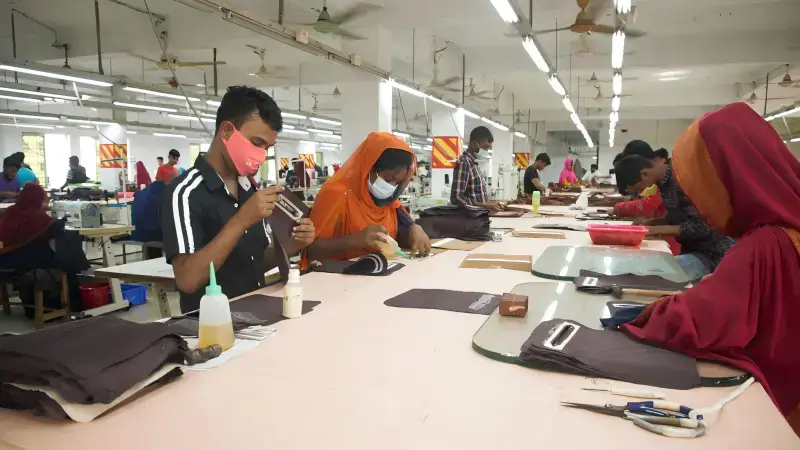
SUNTEAM Factory
High-Volume Chinese Retail-Grade Suppliers
Among the larger-scale Chinese suppliers, factories that have passed audits from major retailers such as Walmart, Target, and Costco, alongside BSCI and ISO 9001 certification, tend to serve brands that need consistent quality at high volume, with design teams producing hundreds of new styles a year and automated production lines capable of meeting large, recurring purchase orders. This tier of lunch bag manufacturers generally suits established retail brands more than early-stage companies testing a new product line, simply because the minimum order quantities and production rhythms are built around steady, repeat business rather than smaller pilot runs.
Bola Bag
Bola Bag, a Vietnam-based OEM and ODM producer that has specialized in backpacks and technical soft goods since 2015, represents a different entry point into the category: a backpack supplier that has extended its fabric and hardware expertise into insulated lunch bags and cooler totes, rather than a factory built around lunch bags first. For buyers who already source backpacks, tool bags, or wholesale sports backpacks from a Vietnam-based partner and want a matching insulated lunch bag added to the same production run, working with a supplier that already understands their branding and fabric specifications can shorten development time considerably compared to onboarding an entirely separate lunch bag factory.
How to Evaluate and Shortlist Lunch Bag Manufacturers
Before committing to a bulk order, it is worth running any shortlisted lunch bag manufacturers through a consistent evaluation process rather than judging purely on unit price. Start by requesting the exact interior lining specification and asking the factory to confirm which certifications apply to that specific material, since certifications are sometimes issued for the outer fabric only and mistakenly presented as covering the entire bag. Next, request a physical sample rather than relying on product photography, and test it under realistic conditions such as leaving an ice pack inside for several hours to check for condensation leakage at the seams. It is also reasonable to ask for references from existing clients producing a similar product category, particularly if the target order involves both backpacks and lunch bags from the same supplier, since that combination requires a slightly broader manufacturing skill set than lunch bags alone.
Finally, buyers should clarify minimum order quantities and lead times separately for sampling versus mass production, and get certification documentation in writing before the purchase order is finalized rather than after goods have already shipped. A manufacturer that answers these questions clearly and quickly, without vague or evasive responses, is generally a stronger long-term partner than one offering only the lowest quoted price.
Final Thoughts
The lunch bag category rewards buyers who look past surface-level pricing and pay close attention to insulation construction, food-safety certification, and the manufacturer’s ability to scale production consistently. Whether the goal is a standalone insulated lunch bag line or a coordinated set that pairs with wholesale sports backpacks for a school, team, or corporate program, the strongest results tend to come from working with lunch bag manufacturers, or a broader backpack supplier with proven lunch bag capability, that can document their materials and certifications clearly rather than simply promising a low price and fast turnaround. Taking the time to request real samples, verify certifications, and test the insulation under realistic conditions before placing a bulk order remains the most reliable way to avoid a costly reorder down the line.
Read more: Top 5 Best Backpack Manufacturers with Global Export Standards


BOLA BAG's BLOG YOU MAY ALSO BE INTERESTED IN
What Is Quality in Garment Industry Terms? Five Things Buyers Actually Measure
How Can I Start Garment Business? A Friendly Step-by-Step Guide
Bola Bag — Your Trusted OEM ODM Laptop Bag Supplier in Vietnam